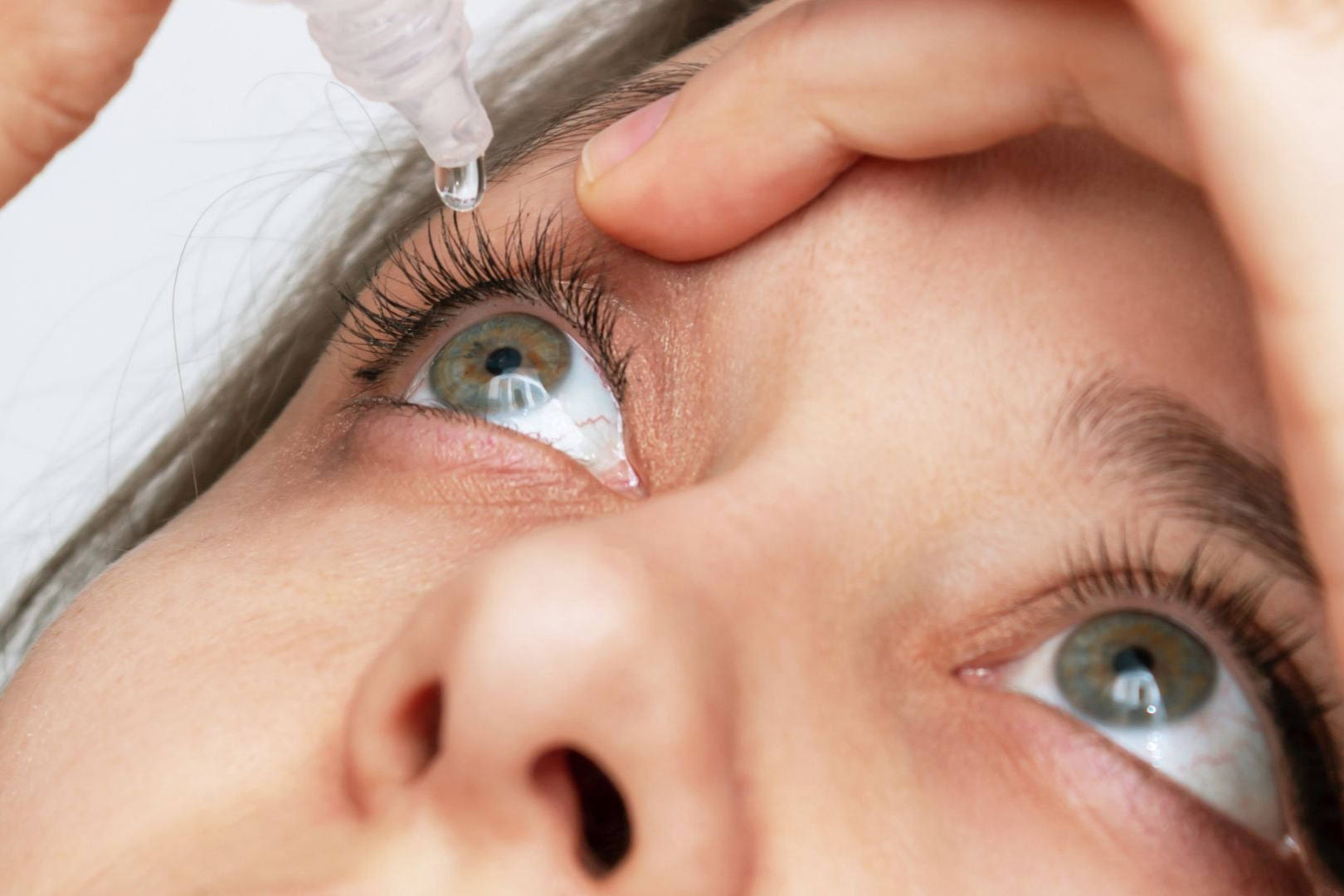
Dry, gritty, watery or irritated eyes are not always simply a problem of “not enough tears”. For many people, inflammation of the eyelids and ocular surface, Meibomian Gland Dysfunction (MGD), blepharitis, rosacea or changes to the eyelid microbiome are contributing to their symptoms.
At Illume Eye Care in Ponsonby, Auckland, Low-Level Light Therapy (LLLT) — also known as photobiomodulation — is one of a range of advanced treatments we use to help manage dry eye and eyelid disease.
Unlike a one-size-fits-all light treatment, our medical-grade LLLT technology allows us to select different wavelengths and combinations of red, blue and yellow light according to your clinical findings.
The result is treatment designed around your eyes, your eyelids and the underlying cause of your symptoms.
What Is Low-Level Light Therapy?
Low-Level Light Therapy uses carefully controlled wavelengths of LED light to influence biological processes within the tissues.
Unlike surgical lasers or high-energy light treatments, LLLT works at relatively low energy levels and does not cut or remove tissue.
Red-light photobiomodulation is thought to interact with light-sensitive components within the mitochondria — the energy-producing structures within our cells. This can influence cellular metabolism, inflammatory pathways, circulation and tissue repair.
For dry eye and eyelid disease, these effects may help support a healthier environment around the meibomian glands, eyelids and ocular surface.
LLLT is generally comfortable, non-invasive and requires no downtime.
How Can LLLT Help Dry Eye?
Dry Eye Disease is complex. Two people with exactly the same symptoms may have very different underlying causes.
One of the most common contributors is Meibomian Gland Dysfunction (MGD).
The meibomian glands run vertically through the eyelids and produce the protective oily layer of the tear film. When their secretions become thickened, inflamed or obstructed, tears evaporate more quickly and the ocular surface becomes unstable.
This can cause symptoms including:
- Dryness
- Burning or stinging
- Grittiness
- Fluctuating or blurry vision
- Watery eyes
- Tired or uncomfortable eyes
- Contact lens intolerance
- Red or inflamed eyelids
Low-Level Light Therapy may be used to help reduce inflammation, support meibomian gland function and improve tear-film stability, particularly in people with MGD-related dry eye.
Importantly, LLLT is not necessarily the right treatment for every person with dry eye. At Illume, treatment recommendations are based on identifying why your eyes are dry in the first place.
LLLT for Meibomian Gland Dysfunction
MGD is one of the leading causes of evaporative dry eye.
Healthy meibomian glands release a clear oil called meibum each time we blink. This slows tear evaporation and helps create a smooth optical surface.
In MGD, the glands may become obstructed or inflamed and the oils can become thicker and more difficult to express.
Red-light LLLT can gently warm the eyelid tissues while providing photobiomodulation. Research suggests it may improve a number of clinical measures associated with dry eye and MGD, including symptoms, tear-film stability and meibomian gland function.
Depending on your examination findings, LLLT may be used alone or alongside treatments such as:
- Intense Pulsed Light (IPL)
- LipiFlow® thermal pulsation
- Meibomian gland expression
- Warm compress therapy
- Prescription anti-inflammatory treatment
- Lubricating eye drops
- Lifestyle and environmental modification
The aim is not simply to make your eyes feel better for an afternoon. We want to address the factors contributing to the underlying ocular surface disease.
LLLT for Blepharitis
Blepharitis is inflammation of the eyelid margins and can have several overlapping causes. These can include:
- Meibomian Gland Dysfunction
- Bacterial imbalance and biofilm
- Demodex eyelid mites
- Rosacea
- Seborrhoeic skin disease
- Chronic inflammation
This is one reason blepharitis treatment sometimes fails when only one approach is used.
For selected patients, red and blue light protocols can complement other blepharitis treatments.
Red light is primarily used for its photobiomodulatory and anti-inflammatory effects, while particular blue-light wavelengths have antimicrobial properties that may be useful where bacterial load or biofilm is contributing to eyelid inflammation.
At Illume, we may combine LLLT with targeted eyelid treatments such as Zocular® ZEST, NuLids, professional lid-margin cleansing and individualised home lid hygiene.
LLLT and Demodex Blepharitis
Demodex are microscopic mites that naturally live around human hair follicles. In excessive numbers, they can contribute to eyelid inflammation known as Demodex blepharitis.
One of the characteristic signs is the development of waxy or cylindrical debris — often called collarettes — around the base of the eyelashes.
LLLT may form part of a broader management plan where Demodex, bacterial imbalance and inflammation coexist. Red and blue light can help target the inflammatory and microbial environment of the eyelids, while additional treatment may be required to specifically reduce Demodex infestation and remove accumulated debris.
For this reason, we do not treat every case of blepharitis in the same way.
Your optometrist may recommend LLLT alongside treatments such as:
- Professional eyelid cleansing
- Zocular® ZEST
- NuLids
- Targeted anti-Demodex lid treatment
- Appropriate home lid hygiene
- Treatment of associated MGD or dry eye
Customised Red, Blue and Yellow Light Therapy at Illume
Not All Light Therapy Is the Same
One of the advantages of our LLLT technology at Illume is the ability to customise the wavelength or wavelength combination according to what we are trying to achieve.
Rather than putting every patient through exactly the same protocol, we can tailor treatment according to your eyelid health, gland function, inflammation, skin and ocular-surface findings.
Red Light — Photobiomodulation
Our 633-nm red-light therapy is the wavelength most closely associated with photobiomodulation for dry eye and MGD. Red light can penetrate the eyelid tissues and influence cellular activity, supporting:
- Cellular energy production
- Tissue repair
- Modulation of inflammation
- Local circulation
- Healthy meibomian gland function
It is particularly useful when treating MGD, evaporative dry eye and inflammatory eyelid disease.
Red + Blue Light — Blepharitis & Eyelid Microbial Health
Blue light has different properties to red photobiomodulation.
Selected blue wavelengths have an antimicrobial effect, making red + blue protocols potentially useful when bacterial imbalance or biofilm is contributing to blepharitis.
The combination allows us to address two different aspects of eyelid disease — supporting healthy tissue and reducing inflammation with red light while targeting the microbial environment with blue light.
It may be incorporated into a wider treatment strategy for blepharitis, recurrent eyelid inflammation and selected Demodex-associated disease.
Red + Yellow Light — Eyelid & Periocular Skin Health
Yellow-light wavelengths interact differently with superficial skin and vascular tissues.
We may select red + yellow light where supporting the health of the delicate periocular skin and eyelids forms part of the treatment goal.
This combination can complement treatment where skin inflammation, redness or periocular changes coexist with ocular surface symptoms.
The important difference at Illume is that the wavelength is selected for a reason — your treatment is based on what we see during your assessment rather than simply using the same colour of light for everyone.
What Does the Research Say About LLLT for Dry Eye?
Low-Level Light Therapy is an evolving area of ocular-surface treatment, with a growing clinical evidence base.
The latest TFOS DEWS III Management and Therapy Report includes LLLT among the in-office technologies available for the management of Meibomian Gland Dysfunction.
Clinical studies have also reported improvements in dry-eye symptoms and measures of ocular-surface and tear-film function following red-light LLLT.
Research has examined both:
- LLLT as a standalone treatment, and
- LLLT combined with IPL
with encouraging results particularly in patients with MGD and evaporative dry eye.
As with most dry-eye treatments, results vary between individuals. Appropriate diagnosis and patient selection remain important.
LLLT or IPL — What's the Difference?
Although both use light, LLLT and Intense Pulsed Light (IPL) are different treatments.
LLLT
LLLT uses continuous or controlled low-energy LED wavelengths to promote photobiomodulation, reduce inflammation and support tissue and gland function.
It can be applied over the entire eyelid and periocular area and different wavelengths can be selected according to the treatment objective.
IPL
IPL delivers very short pulses of higher-intensity broad-spectrum light to the skin around the eyes.
It is particularly useful where MGD, ocular rosacea, abnormal superficial blood vessels and inflammation are contributing to dry eye.
Some patients benefit from one treatment alone. Others benefit from IPL + LLLT in combination, as the two treatments work through different mechanisms.
At Illume, we recommend treatment according to your clinical findings rather than automatically recommending one device or technology.
Can LLLT Be Combined With Other Dry Eye Treatments?
Yes. Dry eye is often multifactorial, so combining treatments can make sense when more than one mechanism is contributing to symptoms. Depending on your examination, we may combine LLLT with:
IPL — Intense Pulsed Light
Particularly useful for inflammatory MGD, ocular rosacea and lid-margin telangiectasia.
LipiFlow® Thermal Pulsation
Designed to heat and evacuate obstructed meibomian glands.
Professional Meibomian Gland Expression
Can help evacuate stagnant meibum following appropriate heating.
Zocular® ZEST or NuLids
Designed to clean and exfoliate the eyelid margins where blepharitis, biofilm or Demodex-associated debris are present.
Topical or oral therapies
When ocular-surface inflammation, rosacea or other clinical factors require pharmaceutical management.
Home treatment
Including appropriate lubricants, warm compresses, eyelid hygiene, blinking strategies, environmental changes and lifestyle support.
What Happens During an LLLT Treatment?
Treatment is simple and non-invasive.
You will sit or lie comfortably while the medical-grade light system is positioned over your eyes and face.
Your optometrist will select the light protocol according to your treatment plan.
A typical session takes approximately 15 minutes.
The light itself is bright but treatment should not be painful. Many people find the warmth relaxing.
There is generally no downtime and you can usually return to your normal activities immediately afterwards.
How Many LLLT Treatments Will I Need?
There is no single treatment schedule that suits everybody. Your recommended number and frequency of sessions will depend on:
- Your diagnosis
- Severity of MGD
- Degree of inflammation
- Blepharitis or Demodex involvement
- Other treatments being performed
- Your response to therapy
Some patients undergo a series of treatments, while others may have LLLT incorporated into an IPL, lid-treatment or maintenance programme.
Your optometrist will discuss the recommended protocol with you before treatment begins.
How Much Does LLLT Cost in Auckland?
At Illume Eye Care, Low-Level Light Therapy treatments start from $169.
Different protocols are available using red, blue, yellow and infrared light according to your clinical needs.
For patients who benefit from combined treatment, IPL + LLLT is $350 per session.
We generally recommend a Dry Eye & Ocular Surface Assessment before commencing an in-practice treatment programme so that we can establish what is contributing to your symptoms and determine which treatments are most appropriate.
Why Choose Illume for Low-Level Light Therapy?
Personalised Wavelengths — Not a One-Size-Fits-All Protocol
Our LLLT system allows us to select red, red + blue, red + yellow and other light protocols according to your clinical presentation.
That matters because MGD, inflammatory dry eye, bacterial blepharitis and Demodex-associated disease are not identical conditions.
Comprehensive Dry Eye Assessment
Before recommending advanced treatment, we can assess:
- Tear-film stability
- Meibomian gland structure with meibography
- Meibomian gland function and oil quality
- Eyelid and lash health
- Blepharitis and Demodex signs
- Ocular-surface health
- Tear osmolarity where indicated
- Rosacea and periocular inflammation
- Other factors contributing to your symptoms
Access to Multiple Advanced Treatments
No single device treats every type of dry eye.
Illume offers a broad range of in-practice therapies including:
- LLLT
- IPL
- LipiFlow®
- Meibomian gland expression
- Zocular® ZEST
- NuLids
- Blephasteam®
- Tixel-i®
- Punctal plugs
- Prescription and non-prescription ocular-surface therapies
This allows us to choose treatment because it fits the diagnosis, rather than trying to make the diagnosis fit the treatment we happen to have available.
Evidence-Based, Clinician-Led Care
LLLT forms part of our wider approach to dry-eye and ocular-surface management.
Our optometrists combine clinical assessment, advanced imaging, current research and ongoing review to develop a treatment plan based on your individual findings.
We are also happy to work collaboratively with your optometrist, ophthalmologist, GP or other health professional when more complex ocular-surface care is required.
Looking for LLLT Dry Eye Treatment in Auckland?
If you have persistent dry, watery, gritty, irritated or tired eyes, recurrent blepharitis, Meibomian Gland Dysfunction or Demodex-associated eyelid disease, the first step is understanding what is driving the problem.
At Illume Eye Care in Ponsonby, our comprehensive dry-eye and ocular-surface assessments help us look beyond symptoms and develop a treatment plan based on your individual findings.
Book a Dry Eye & Ocular Surface Assessment to find out whether Low-Level Light Therapy is appropriate for you.