
Imagine your child waking up every morning with clear vision, without needing to reach for glasses or struggle with contact lenses all day long. Sounds like a dream, right? For many children (and adults!) with nearsightedness (myopia), this dream is a reality, thanks to a revolutionary treatment called Orthokeratology, often simply called Ortho-K.
If you've been searching for ways to manage your child's myopia beyond just stronger glasses each year, they're a really active child or they really don't enjoy wearing glasses, Ortho-K might be the answer you've been looking for.
What Exactly is Orthokeratology (Ortho-K)?
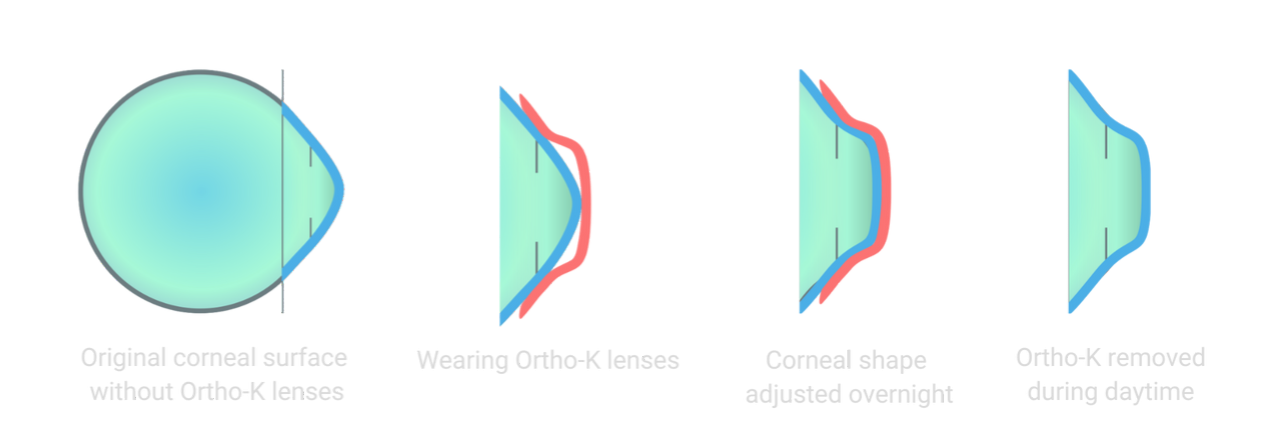
Orthokeratology is a non-surgical process that uses specially designed, rigid gas permeable (RGP) contact lenses to temporarily reshape the cornea while you sleep.
Here's how it works
- Wear overnight: Your child wears the custom-fitted Ortho-K lenses while they sleep.
- Gentle reshaping: These lenses apply gentle, precise pressure to the cornea, subtly flattening its central surface, without causing any pain.
- Remove in the morning: When your child wakes up, they remove the lenses, and their cornea retains the new, flatter shape.
- Clear vision all day: This reshaped cornea allows light to focus correctly on the retina, providing clear vision throughout the day – no glasses or daytime contacts needed!
The effect is temporary, so the lenses must be worn every night to maintain clear vision.
Why Consider Ortho-K, Especially for Kids?
Orthokeratology isn't just about convenience; it offers significant advantages, particularly for children with progressive myopia.
1. Freedom from Daytime Vision Correction
This is the most immediate and exciting benefit for children.
- Active Lifestyles: Kids can swim, play sports, and participate in all activities without the hassle of glasses slipping down their nose or contacts getting lost or irritated.
- Confidence Boost: Many children feel more confident and less self-conscious without glasses, especially during their formative years.
- No Lost Glasses: Parents can breathe a sigh of relief – no more frantic searches for misplaced spectacles!
2. Myopia Control: Slowing Down Nearsightedness (Myopia) Progression
This is arguably the most significant long-term benefit of Ortho-K for children.
- The Problem with Progressive Myopia: Myopia tends to worsen rapidly during childhood and adolescence. High myopia can lead to increased risks of serious eye conditions later in life, such as retinal detachment, glaucoma, and myopic maculopathy.
- How Ortho-K Helps: Studies have shown that Ortho-K lenses can effectively slow down the progression of myopia (both prescription and axial length growth) in children by up to 30-60%(1). While traditional glasses correct vision, they don't prevent the eye from lengthening, which is what causes myopia to worsen. Ortho-K creates a peripheral defocus that signals the eye to slow its growth.
- Protecting Future Eye Health: By controlling myopia, Ortho-K helps protect your child's long-term eye health and reduces their risk of future eye complications.
3. Safety and Reversibility
- Non-Surgical: It's completely non-invasive and doesn't involve surgery.
- Reversible: If treatment is stopped, the cornea gradually returns to its original shape, and vision reverts to its pre-treatment state. This offers peace of mind compared to permanent surgical solutions.
- FDA Approved: Ortho-K is an FDA-approved treatment for myopia correction(2).

Who is a Good Candidate for OrthoK?
Ortho-K is generally best suited for:
- Children with mild to moderate myopia (nearsightedness) and sometimes mild astigmatism.
- Children whose myopia is progressing each year.
- Active children and teens involved in sports or water activities where glasses or contacts are inconvenient.
- Patients who prefer not to wear glasses or daytime contact lenses.
- Individuals who are not yet old enough for refractive surgery (like LASIK).
- A comprehensive eye exam with an optometrist specialising in Ortho-K is essential to determine if your child is a suitable candidate. They will assess corneal shape, prescription, and overall eye health.
What's Involved in the Ortho-K Fitting Process?
- Initial Consultation & Mapping: A specialised optometrist will perform a thorough eye exam and use a corneal topographer (a sophisticated instrument that maps the exact curvature of the cornea) to design custom lenses for your child's unique eyes.
- Lens Fitting & Education: Once the lenses arrive, your child will have a fitting appointment where they learn how to insert, remove, and care for their lenses. This is a crucial step!
- Follow-Up Appointments: Regular follow-up visits are necessary to monitor progress, ensure eye health, and make any necessary adjustments to the lenses

Give Your Child the Gift of Clear Vision and Future Eye Health
Orthokeratology offers an exciting and effective way to not only provide clear daytime vision but also to actively manage and slow the progression of myopia in children. This can significantly impact their quality of life now and protect their vision for decades to come.
If your child is nearsighted and you're looking for an alternative to ever-stronger glasses, talk to your local optometrist about whether Ortho-K could be the clear solution for your family.
At Illume Eye Care we offer optometrists who specialise in Orthokeratology fitting, we also provide comprehensive paediatric eye examinations for detection, diagnosis and monitoring of children’s myopia using advanced imaging and analysis, OCT and axial length testing to give your child personalised care.
References
1. Sun, Y. et al. Orthokeratology to Control Myopia Progression: A Meta-Analysis. PLOS ONE 10, e0124535 (2015).
2. Saviola, J. F. The Current FDA View on Overnight Orthokeratology: How We Got Here and Where We Are Going. Cornea 24, 770 (2005).